Thursday, January 17, 2013

Escaping the January Mud


Just when things were feeling and looking great... The rain set in with a cold vengeance and we have been rendered completely useless. It's Thursday and the temperatures are dropping, the rain turning to sleet and snow. For four days, Tucker and I have been slushing feed and hay through the mud, changing out soaked blankets and letting a few into the stalls to dry out. The first day of rain, I trimmed Vicar but decided to wait to repair his cracks until things were a little drier. I trimmed Z's mane on Tuesday. But overall, we've accomplished NOTHING for 4 days. I have to tell you there is nothing that irritates me more than doing nothing.

So, soaked and freezing, I dragged Tucker off to Starbucks yesterday and pulled her into my favorite January fantasy... The Winter Mixed Sales at Keeneland and Ocala. Last year I actually escaped the misery of January and went with Yvonne Maddelena and Danielle to Keeneland for the sale. This may have been a bad idea since I really didn't need much more fuel on the fire of my passion for Thoroughbreds and racing. But the sale, the exchange of money for unproven genetics, the study of statistics and the beautiful horse flesh converged in my mind like a literary well spring. Here was a world that I longed to participate in, but even if I couldn't, I could virtually participate in. You see, the American Thoroughbred industry is the most incredible machine in the horse industry because it is thickly layered with statistics, industry press, and methods for anyone to participate. And I mean ANYONE- blue blood to blue collar.


Here's how they do it...

There are several arenas of the Thoroughbred industry that are monitored by industry tools. There is the auction- the place where genetics and the marketplace create a whirlwind of wins and losses that number in the millions. Each major auction site (Keeneland, Ocala, etc.) maintains an extensive, highly searchable database of bloodlines, buyers, sellers and prices. Sales happen several times a year with focuses on different types: yearlings, two-year olds in training, broodmares. Buyers are able to research endlessly to predict prices on their desired purchases. Matings for the year are planned and stallion breeding shares are determined on recent market highs and lows. These micro-economies illustrate trends in the marketplace as a whole. The information is abundant and search-ability rivals any Google pursuit allowing any student of the industry an opportunity to imagine themselves an expert. If you are a research junkie like myself, the tools of the auction sites are better than any candy shop I've been in.


The first Thoroughbred auction I ever attended was the Ocala Winter Mixed Sale in 1996. I talked my grandmother (who was my favorite horse show and horse activity companion until her death in 2007) into driving down to Ocala to take in the horse world during one break when I was home from college  for the holidays. While in Ocala we attended a show jumping competition and a day of the sale. At that time I was much more familiar with the world of show jumping than I was with racing. When we entered the main auction room I was struck with the formality and etiquette that was totally unfamiliar. Also I was struck by the prices. Fat colts garnished high dollars while horses of riding age that looked like perfectly good specimens for showing sold for almost nothing. I remember catching the attention of an older gentleman that could see right away that we were novices. We were thankful when he opened the catalogue and began to decipher the pedigrees and expressions of value. I knew nothing of what it all meant and a single explanation was hardly enough to discern the meaning that the other bidders battled over. However, my curiosity was sparked. The older gentleman offered one piece of advice, "Most people determine a horse's worth by their sire. But the real success of a horse is in their damlines." Anyone who's been around horses a while can recognize the tone of wisdom in an old horseman's voice. To this day when I'm looking at a pedigree I hear that fellow's voice.

Yvonne matching the catalogue with the horse.


When I attended the Keeneland Winter Mixed Sale in 2012, I was equipped with a notebook of research and some experienced company: my friend Danielle and her parents who had purchased several yearling in years passed. I was also thankful to have Yvonne with me. She is one of the few horse friends that I have that is as engaged by the world of racing as I am (I may have corrupted Tucker by now). Mind you, I had no intention of purchasing anything. I was on a pure reconnaissance mission. (In my fantasy world I will one day try my hand at the racehorse world). This adventure was definitely more fleshed out than my first sale experience. We spent time in the barns before the sale, handing over cards with the numbers for the horses we wanted the consignors to parade out for us. We stood in the holding area of the sales pavilion and examined vet records. At one point Yvonne and I talked ourselves into bidding on a broodmare that quickly priced out of our pittance budget. All the while Danielle and her father explained nuances that were passing over our heads without notice- fractions from recent races of racing age fillies and colts, conformation faults that were easy to overcome in racing versus ones that were crippling... the tapestry of the auction world increasing in intricacy and allure as the day wore on.

Danielle assured us that our experience was not complete without a visit to the stud farms. Did I happen to mention that Danielle is a very successful enabler of anyone with a Thoroughbred problem?
Winstar Farm


The view from Darley


In my opinion, one of the great treasures of Americana are the Kentucky bluegrass Thoroughbred stud farms like Lane's End. These farms are palatial symbols of American agriculture. They are immaculate, grandiose and pastoral like no other place I have seen in this country. Part of what is so incredible is the quantity of beautiful farms. We had time to visit four farms and were able to see in person great sires such as A.P. Indy, Holy Bull, Dynaformer, Street Cry and the ever popular Bernardini. It was an experience that only added to the romance of racing.


Bernardini


Flashforward to 2013 and January in the Alabama Mud

Since Danielle has relocated to Florida, she planned to attend this year's Ocala January sale. Although I do not have the means to be in Florida for the sale, the weather in Alabama definitely sent my mind to Florida. She was interested in a horse of racing age and I followed along virtually by watching the Under Tack Show of the horses galloping and making a list of virtual picks. I commented on certain horse's styles of running- some ran head high, others stretched long and low as they dug into the dirt. One gelding struck both of us as having an impressive stride and style. I also took particular interest in an English Channel colt with a broad white snip across his nose and gallop that was flat and seemed to cover twice the length of a normal horse's stride. (As an aside, I read yesterday that stakes winning horses on average have a stride length of over 24 feet). I made a list of choice horses on my Ipad and the following day of the sale, between strides across the six inch deep mud to dump the wheelbarrow of manure from cleaning stalls, I checked auction results to see how my choices did. Meanwhile, Danielle was on scene, in the action, trying to purchase her own picks. The results were discouraging for a poor horseman like myself. And based on the brief texts from Danielle after the auction, she was thinking something similar. (Two years ago it seemed like anyone could buy a racehorse at an auction with a little bit of chump change. Now the chump change is getting serious. If the racing industry is any indication of the progress of the economy, America is definitely on an uptick.) Of my picks, the English Channel colt was the highest priced. Maybe someone else was also measuring his stride at over 24 feet.

At Starbucks with Tucker, I easily engaged her research-minded nature in the sources of information and the guesswork connected with the auction. A year ago when I returned from Kenneland, we used the "Virtual Stable" on Equibase to satisfy our racing desires. Tucker filled her imaginary barn with Lawyer Ron runners and I imagined success for 2 year olds by such new sires as Utopia. Throughout this past year, we would occasionally comment on the successes or failures of our horses. We tried to understand how recorded workouts reflected on eventual races, all the time enjoying these up to the minute results available from the tool the Thoroughbred industry uses to fuel racing passions.

Just a Horse of Course

I love escaping the drudgery and frustration of a muddy January by spending hours on the internet following rabbit trails and hunches through the maze of information on Thoroughbred racing. The fields are unridable at the moment and keeping my horses warm and not losing too much weight in this weather is enough to keep me awake in the middle of the night. Thankfully I can distract myself with the genetics and economics of the sport of racing. The tools the industry provides to gather statistics means that even though I do not have millions to spend purchasing and racing horses, I can populate my fantasy world with real buys and watch their successes and failures without feeling the financial pain of the actual owners. Meanwhile, back in reality, I will continue looking after my youngsters who have migrated from their failures in the "glamourous world of racing" to our humble setting in Alabama and try to convince them that racing is nothing compared to jumping and dressage... in spite of the mud of January.

January Mud in Alabama


Wednesday, January 16, 2013

Mickey Mouse and his Influence on New Year's Resolutions


Leaving the Ponies Behind for a Much Needed Family Vacation

Two days after Christmas, the Jackson family left the ponies in Wilsonville and headed south to join the Baran family clan in the land of Mickey. It was a much needed escape from all things work-related, horse-related, and general daily stresses. We were thrilled to be invited to the semi-annual family gathering of the Barans, my late step-father's extended family, and were ready to enjoy some good-times in the Disney World Kingdoms with my mom, sister and the wonderful Baran clan. In spite of remarkable crowds, we managed to work our way through the international throngs of people and enjoy a few rides, a few shows and generally drink in the happy world of Mickey and friends. I say this with a tone that might sound sarcastic to some- given any previous experience with the wall to wall people of holidays at Disney- but in all honesty I was completely blown away by the wide-eyed, goofy happiness that people from all over the world could share in spite of waiting in line for two or more hours for 5 minutes of fun. And I was right in there with them.

On the 9.5 hour drive home after our four days of Disney, I had a lot of time to reflect on the power and success of Walt Disney's empire and what made it so attractive to so many people from every corner of the world. I was completely awestruck by the people- thousands of all ages, races and languages- proudly sporting a set of mouse ears. And believe me, my cynical-side was completely prepared to scoff at Mickey's classic show, "Dream Along with Mickey" at the foot of Cinderella's castle. But I had Honor, my three year old daughter and I knew I was going to watch the show for her. What I hadn't realized was that I would get tears in my eyes as Mickey tried to convince Donald that, "Dreams Really do Come True," and they wouldn't just be sentimental tears for Honor. They were sentimental tears for myself. I too really wanted to believe that, "Dreams Really Do Come True." So just like the rest of the masses, I was soon ready to don a pair of mouse ears. If Walt Disney could imagine a theme park like that, figure out a way to convince millions, maybe billions of people to travel thousands of miles, and pay thousands of dollars to stand in hours and hours of lines, anyone's dream- given the right planning, right people and right circumstances- could come true. Tears shed, I was ready to drink the Disney kool-aid.

So, how does Disney do it? I reflected on this question and these are the simple answers I took away from my Disney World experience: Stay Positive. Have a simple system and stay committed to it. Encourage optimism in others. Envision the future within the scope of your system. Produce a reliable product first, an exceptional product will eventually happen if the system, the future vision and the optimism stay in place. But above all, don't be afraid to be happy and dream big. Maybe this sounds silly to you? Well you probably need some mouse ears to get it.

Back at the Ranch

On December 19, I rode five of my horses for the last time in 2012. After each ride, I had a feeling that the horses understood some of the simple things I had been working on and we were ready for the next level. I guess it was coincidence or maybe a horse conspiracy, or just my vacation-needing imagination that made it happen in one day. Regardless, I happily kicked the ponies out into the pasture and said, "See ya, next year!"

I got back from Disney World on New Year's Day and returned to the farm the next day. As usual, time away only filled my head with more ideas and ambitions. As well as going to Disney, my mom, sister and I spent one day at Tampa Bay Downs with my good friend and source for all things thoroughbred, Danielle. The one day in another horse world had given me an interesting perspective on the horse business in general that will take weeks, maybe months to sort through. But needless to say the day at the track also confirmed some of the same ideas I had developed from my experience at Disney; namely, success is built on methodical adherence to a simple system. The key here that I think I was still missing in my program was "methodical adherence." If you know me, you know that creating and thinking forward is easy for me, but being methodical? That is an elusive skill.


On the track, everything gets started around 5:00 am, and training on the track starts at 6:00 a.m. Every horse that needs to be worked, has to be fit in before 10:00 am when the track closes for training. Several hundred horses must be worked in this four hour window. In order to successfully accomplish this especially with young, extremely fit Thoroughbred horses, riders and trainers must be efficient, systematic and cooperative. All the horses are worked in a similar fashion, in the same direction, with a very consistent routine. Riders and trainers follow "the rules" in the barns as well. For example horses are cooled out with hand walking along the shedrow, all going in the same direction with specific etiquette for any stopping and watering. The sheer quantity of horses requires a method.

I have certain circumstances that prevent me from starting my day at the barns at 5:00 am, namely a child to get to school and a 45 minute drive to the farm. However the clearly defined time in which to accomplish my training is very much a reality. Committing to training a certain number of horses within that time frame is where the method comes in. I basically have 6 hours each day to get 8 horses worked. This means I need quality not quantity in my rides, with an added awareness of how to spread out a fitness regimen between the horses to make up for the shorter rides.

The System

As I have stated before in my blog, I like themes in my training. It helps me have a touchstone by which to evaluate the progress of such a variety of young horses. When looking backwards from my competition goals for each horse, I think about where the holes are and what exercises will fill in the gaps and improve the overall way of going. Even though my horses may specialize in competition in either show jumping, dressage or eventing; I train all of my horses generally as if they are going to event. What this means is that their dressage skills, their show jumping skills and the cross country skills can not be neglected. In simple training terms, this means that they need to be supple, balanced and obedient in their flatwork; and relaxed, rhythmical and brave over all types of fences. Obviously these skills are intermingled. So the system starts with this overall objective.

On a day to day basis, I pick a skill to work on and an exercise to achieve that skill. I keep my ride simple and positive. I ride for a minimum of 20 minutes and rarely more than 45 minutes. If I get what I want in 10 minutes, I trot hills, walk the lake (in the winter I am lucky to have the lake bed filled about 2'6" feet deep with water which provides a nice strengthening exercise) or I pick a footwork challenge for the horse- negotiating a muddy bank, hopping over a scary ditch, cavaletti. When I only have 15 minutes for a horse at the end of the day, I do some sort of groundwork inspired from the Buck Brannaman clinics I have done which improve the sensitivity of the horse and encourage the horses confidence in itself and me.

Producing a Reliable Product

Last year my business became more focused on training horses for sales. Although I love and want to teach young riders, my location is beyond the distance that most suburban parents can carry their children after school for lessons. As a result I have begun to pay more attention to what kinds of horses riders want to purchase. One of the glaringly obvious realities of the show horse marketplace (especially in eventing) is that there are a lot of horses out there for sale that are difficult to ride and difficult to handle. I am most familiar with the horses available for sale in eventing and I have observed that the majority of horses produced by upper level riders that are for sale were either originally purchased to be upper level mounts but didn't make it; or they have been rushed up the levels in order to get a price that gives the trainer some sort of return on their investment. Both of these scenarios rarely produce a horse that is a suitable mount for an amateur or young rider. I am not trying to pick on upper level riders. Actually I am incredibly sympathetic. The economics of eventing is set up to create this scenario. There is absolutely not enough money in eventing to support an "event horse sales business."

Unfortunately but fortunately for me, I can not afford to show my horses all the time. I have to be very selective about putting them in shows that they can be successful in. And I have to spend the majority of time training rather than showing. This is not to say that my horses are somehow better trained than another trainers. We all know that you can train a horse to death at home, but if they have not been to a show, you have no idea how well they will handle the show environment. Rather I am stating how I have had to tailor my ideas and goals with horses based on my economics. Instead of producing a flashy, adrenaline-inducing upper level show horse, I have turned my attention to producing a reliable, confident horse that amateurs can ride in a show or clinic and have fun. And if Walt Disney's philosophy works, the exceptional product will come out of producing a reliable product with an eye on the future.

Now that I have picked on upper level riders, let me pay a compliment based on an experience I had with a horse for sale that was ridden by the upper level rider, Charlie Plumb. In 2011 I had a student looking for a horse and one of the first horses that we tried was a young horse that Charlie was competing at the Novice level. We were at an event at Chattahoochee Hills and after the event was over, we took this horse and another of Charlie's out on cross country to try. I rode this horse and my student rode another of Charlie's that we expected to be more suitable. I liked the young horse I rode, but he was clearly a bit mischievous as Charlie had told me and not suitable for the student. A year later, I was with another young rider trying horses and we tried this same horse. The horse was now competing consistently at Training level and regularly in the top 5 in its division. I asked Charlie why he had not moved the horse up and he mentioned several reasons but most importantly he said he had recognized that the horse was going to be a horse for an amateur or young rider and he wanted to make sure it had a solid foundation. When I rode the horse a year later, I was very impressed with the changes in the horse. He was workman-like, rhythmical and generally easy to ride. Unfortunately he was a bit small for the young rider I was with and therefore we had to pass on him. But I was impressed with the training that Charlie had done with the horse over the course of a year.

We all know that horses are good at making liars out of the best of trainers. Also the economics of horses can be high risk/low profit, making it a marginal business endeavor at best. But I keep looking for ways to beat the odds, stay optimistic and dream big; and I have come to the conclusion that if you make horses that make people happy over the long run, then the economics will work out. And the trick to this is making sure the horses are "broke" before you get out there competing. So the system has to have a foundation in ridability.

Disney's Influence on my New Year's Resolution

I am now a week into my new year of riding with my resolution of a "methodical adherence" to a system that produces a reliable mount and I have to say the results are inspiring. I think the two week break helped everyone and the horses returned to work feeling very sound with happy attitudes. But the routine also seems to be contributing to remarkable headway. I have already begun working over ditches, jumping banks and liverpools with all of the horses including J'Adore, Phippen, Crown and Rocky. My theme on the flat has been to improve engagement or "push" through transitions and lateral work and the horses seem to be trying harder and listening better. In general I see that everyone seems to have a clearer head about the work to do.

As the new year progresses I plan to evaluate whether the intermittent shorter rides effect fitness. One of the things I noticed last year in all of my horses was that I wanted them to be stronger and possibly a bit more fit (carrying their effort over a longer ride). I intend to do more strength training this year, including more hill work and interval training. My competition goals remain ambitious and I will have to stay consistent rain or shine with this routine to have that ridable, competitive horse that I aspire to.

So, thanks Mickey, for the inspiration and I'll get back to you Donald on whether dreams really do come true if you follow Walt's way of doing things.


Saturday, December 22, 2012

Breeding the Show Jumper - Influence of the Selle Fracaise bloodlines

Quidam de Revel


In order to improve my own education on bloodlines I have been doing a bit of research into prominent show jumping horses and their families. I have used several sources that I was previously unaware of including the sites:

Sporthorse Database

World Breeding Federation of Sport Horses

The WBFSH compiles a list of top horses competing in each discipline and the bloodlines. They also have a list of top sires. These lists are based on FEI competition results. I also looked at the horses that were in the top 10 placings in show jumping at the 2012 London Olympics. In some cases the same horses were involved. In many cases the same bloodlines are involved. One of the impressions that I got from studying this list was the overwhelming presence of Selle Francais bloodlines in the top show jumping horses; even in the top competing Dutch, Holsteiner and Belgian Warmblood horses.

WBFSH Top 10 Jumping Sire Ranking

1 BALOUBET DU ROUET (SF)- 10.328
2 KANNAN (KWPN) - 9.576
3 DARCO (BWP)- 8.442
4 QUICK STAR (SF) - 7.983
5 HEARTBREAKER (KWPN) - 7.499
6 CARETINO (HOL) - 6.844
7 QUIDAM DE REVEL (SF)- 6.308
8 NABAB DE RÊVE (BWP but 100%SF)- 6.067
9 DIAMANT DE SEMILLY (SF)- 5.644
10 CARTHAGO (HOL)- 5.585


Of the top 10 Sires, 5 of them are 100% Selle Francais; 3 are over 25-50% Selle Francais, 1 is 1/8 Selle Francais. Only Darco has no evidence of the Selle Francais blood influence.

The top 10 horses in Show Jumping from the Olympics are:

Nino Des Buissonets (SF) Kannan/Narcos II
Eurocommerce London (BWP) Nabab de Reve/ Chin Chin (56% SF)
Blue Loyd 12 (Old) Landor S/Hadj (50% SF)
Noblesse Des Tess (SF) Cumano/ Irak E
Rosalia La Silla (HOL) Cassini I/Contender (12.5% SF)
Hello Sanctos (SBS) Quasimodo/Nabab de Reve (62% SF)
Big Star (KWPN) Quick Star/ Nimmerdor (50% SF)
Flexible (ISH) Cruising/Safari
Star Power (KWPN) Quick Star/ Calvados (75% SF)
Tripple X III (AES- KWPN) Namelus R/ Calve Z(25% SF)

Out of these 10 horse, 7 are 50-100% Selle Francais. Two of the remaining three are 12-25% Selle Francais. Only Rich Fellers' Cruising does not have a significant influence of Selle Francais in his breeding. However, he is significantly Thoroughbred in his Irish Sport Horse breeding which is worth considering when analyzing what kind of genetics make the Selle Francais blood so significant in top level show jumpers.

Whenever you take current success at the top of the levels and try to break it down to bloodlines, you have to take into account trends at the time that the horses were born. In this case the majority of the horses competing in the Olympics were born between 2000-2003. Two Selle Francais sires that show up more than once in direct lineage are Nabab de Reve and Quick Star. Cor de la Bryere is the most well known Selle Francais that shows up somewhere in almost all of the show jumping sires. I examined these three stallions in an effort to better understand the nature of the Selle Francais success.


Cor de La Bryere - the Thoroughbred influence


Cor de la Byere was born in 1968 in France. "Corde" as he was nicknamed was by Rantzau, a French Thoroughbred racehorse who later became most well-known for the jumping horses that he sired. Rantzau had a reputation for producing sensitive, difficult horses that were generally excellent jumpers. The dam of Corde was Quenotte B by Lurioso,who was sired by Furioso, an equally influential Thoroughbred stallion. She was a Selle Francais show jumper. Although Cor de la Bryere's bloodlines were considered exceptional, the French selection committee recommended that he be gelded. Instead he was sold to the Holsteiner Verband as a 3 year old and later that year won his 100 Day Test.

Cor de la Bryere stood at 16.2 1/2 hands (169cm). He was a dark bay with one white hind stocking. I was unable to find out any information about whether he was ridden, but his success in the breeding shed overshadows any question of his value. With select mares he produced some of the most important sires in sporthorse breeding.

As quoted in a Eurodressage article:

The mare Tabelle (by Heißsporn) brought five approved sons in a row. First of all the sons Calypso I and Calypso II got big influence in the Holsteiner - and Hannoveranian - breeding of today. The mare Furgund (by Colombo) was bred by Cor de la Bryère 18 times and delivered five approved sons. One of them, Calando I, was German Champion in jumping with Karsten Huck, and today he is still one of the most important sires of the Holsteiner breed.

The mare Deka brought the approved stallions Caletto I, II and III by Cor de la Bryère. Calleto I was very successful in the international jumping circuit with Michael Rüping and today he is a demanded sire. The most important Cor de la Bryère-son for the breeding must be Caletto II, sire of the Olympic Champion Classic Touch, who lost his life by a tragic accident after only four years breeding.


The offsprings of Cor de la Bryère were also very successful in sport. First of all the dressage champion Corlandus, who was a highlight on the international dressage scene for many years, ridden by French Margit Otto-Crepin. The grey Corrado I, who has returned for breeding at the Holsteiner Verband, won several World Cup-qualifications under Franke Sloothaak.

Corde was known to produce incredible bascule, scope and jumping technique. He was also know to produce highly trainable, good dispositions with an excellent, balanced canter. He had a freedom of movement that made him suitable for both jumping and dressage horses. His athleticism and springiness improved the longevity of jumping horses preventing premature breakdowns previously caused by horses that exhibited only raw power. However his influence was predominantly in the German breeding of Oldenburgs and Holsteiners, where he crossed well with the powerful, heavier warmblood mares. It took a number of years for the French to see the usefulness of their own son.

Quick Star - The Anglo Arab Influence

Quick Star was born in France in 1982. His sire is the well known Galoubet who is predominantly French Trotter crossed with Thoroughbred. And his dam, Stella, who was 7/8 Anglo Arab was a highly successful jumper under Nelson Pessoa. Stella was sired by Nithard, who was considered the "foundation sire of the modern Anglo-Arab." Nithard started with a respectable career on the racetrack but went on to sire some very influential progeny including his grandson, Matcho AA, who was imported to Hanover and has had a significant influence as a broodmare sire of dressage horses.

Quick Star was small in stature standing just at 15.2 hands (159cm). He was ridden by Meridith Michaels, who took him to Germany with her when she moved and later married Markus Beerbaum. While in Europe with Meredith Michaels-Beerbaum, Quick Star was stabled at Paul Schockemoele's stables and was supposedly used by Paul Schockemohle for his own breeding purposes covering around 400 mares without the owner's approval. The owner, Alain Katz, had difficulty impressing the French breeders with this "midget" but the criticism was soon proven wrong by the success of his offspring. He seems to have inherited force, power and courage from his Galoubet lines, and the intelligence and technique of his dam line.


Quick Star is known for producing spirited horses with lots of character; strong, short backs capable of catapulting over the fences, and occasionally some aesthetic weaknesses including disproportionate head and necks, and less than perfect front ends. His youngsters are known for their strong wills, keen attitudes, and incredible jumping talent. In forums on the internet, he is described as a producer of horses that challenge the average amateur but are unmatched in jumping talent.

Nabab de Reve - the French Demi-Sang influence

Nabab de Reve was born in Belgium in 1990 and is by the well known Selle Francais stallion, Quidam de Revel. Although Nabab de Reve is registered as a Belgian Warmblood, his dam is also a registered Selle Francais. The bloodlines are pure French, combining well known French Demi Sang lines with an infusion of Thoroughbreds such as Orange Peel, Furioso, Rantzau. The result was a highly successful show jumper that competed at the international level with great success. Nabab's jumping style shows great front end technique characteristic of other French Thoroughbred lines like Furioso and Rantzau. But unlike the hotter more aggressive style of a horse like Quick Star, Nabab appears to leisurely power over the fences.


Nabab was ridden by Phillipe Le Jeune at several world championships including winning the bronze medal at the World Games at Jerez. In 2002 he was named Horse of the Year by the BWP ( Belgian Warmblood organization). He has produced several licensed sons for the BWP including Bacardi van’t Lambroeck, Winsome v d Plataan and Vigo d’Arsouille. Nabab de Reve has produced numerous successful show jumpers including Olympic successes, Eurocommerce London, and Hello Sanctos. He has proven to be an excellent broodmare sire and seems to cross well with the offspring of Cor de la Bryere's sons. He is also considered an excellent cross with Heartbreaker mares. Unfortunately his frozen semen has mixed reviews and there are few off-spring in the United States. Nabab's get tend to be large with notoriously plain heads. They are known to be honest with a good temperament for amateurs. In most videos of offspring that I have seen, Nabab produces horse with elastic form, great shoulder rotation and opening up of the hind-end over the fences.


Expertise is Earned not Purchased


Breeding success is not something that can be purchased in a single horse or dose of semen. The majority of breeders that have produced Olympic show jumpers have acquired their knowledge through years of experience at shows, auctions, and the breeding shed. The Selle Francais's success in show jumping seems to be the result of a multi-generation focus on creating superior jumping power and technique. The Selle Francais breeders have combined proven Anglo Arab and Thoroughbred blood with the stronger, more powerful French warmblood and trotters to produce horses that have a reputation for being keen and careful jumpers with a lot of power. The bloodlines that are more predominantly Anglo-Arab lines have a reputation for quick, careful jumps as well as strong wills and intelligence making them excellent top level competitors but not necessarily suitable for an amateur.

It seems that a breeder interested in pursuing a breeding program that utilizes the Selle Francais lines would be advised to consider the distinctive differences in temperaments between the Selle Francais horses heavily dosed with the French Demi Sang/ Trotter lines and the more Anglo-Arab/ Thoroughbred lines. This requires an examination of three to four generations. But regardless of the choice in family, it is undeniable that the Selle Francais lines offer a heavy dose of power and technique on the horse bred for the top levels of show jumping. The number of Selle Francais horses that were successful at the Olympics in 2012 indicates to me that the French continue to have a "finger on the pulse" of successful pairings for top level show jumpers.  

Thursday, December 13, 2012

Breeding with Purpose - Outlining The Journey

In anticipation of the start of breeding season I decided to delve into some thoughts and observations I have made recently about the breeding of sport horses. I am not any kind of authority on the subject but I am definitely a student of bloodlines and what they produce. I am also very interested in the marketplace for horses because the majority of my business is training for sales. In the U.S. a breeder of sporthorses can rarely recuperate the expenses they put into their offspring unless they sell them within the first year. This results in most breeding programs being short lived and short sighted. I believe that if the United States wants to be competitive on the international scene, then there must be an American breeding program producing quality horses for American riders.

I have observed that the breeding of horses for equestrian sports in the U.S. is no where near as organized as it is in Europe nor as organized as Thoroughbred breeding in the U.S. The only explanation I have for this is that the marketplace for sporthorses lacks any cohesion. In order for breeders to have a reliable market for their horses, various breed organizations and sport organizations need to work together to create an infrastructure that includes reliable statistics, quality auctions and incentive programs that financially encourage breeders to participate. All of the elements exist in the U.S., there is just not a network to unify them. The result is that American breeders often choose bloodlines based on convenience and information no more reliable than rumor; and then they pray that they will get lucky and sell whatever they produce.

The Breeding Plan

I am a person who likes to hear why breeder's do what they do. I recently communicated with a breeder that had a sibling of my stallions about their program and in spite of being virtual strangers our phone conversation lasted over an hour. This particular breeder had acquired several thoroughbred mares off the track and was breeding to young American warmblood stallions that had demonstrated excellent scope over fences in their stallion testings and were second generation lines of prominent European stallions. He had produced some nice horses but was frustrated with the limitations he faced in getting his horses sold. The basic gist was that he was having to sell his horses before they began their show careers because he did not have an in-house trainer. However the trainers that purchased his horses were tripling their investments within the year. He was eager to participate in these profits but thus far had been unable to figure out a way to. Although we all know the scenario of tripling profits with horses is rare and very circumstantial, the essence of this breeder's quandary was that he was frustrated with the limitations inherent in the marketplace.

I came away from this conversation with two thoughts. First, there seems to be an opportunity for partnerships between breeders and trainers of young horses. And secondly, many breeders do not have a budget or a plan to train and show the horses that they breed. Their goal is to sell them young. This is understandable given that putting a young horse with a reputable trainer can cost $1200-$2500 per month depending on what part of the country you live in. To bring a young horse from first rides through a program like the USDF Young Dressage Horse or USEF Young Jumper Championships requires a minimum of 18 months which equals $21,000 to $45,000 in training costs. In addition, annual show expenses could run an owner anywhere from $10,000 to $25,000. Based on these round numbers the investment in a horse competing as a five year old is estimated to be anywhere from $57,000 to $100,000. This sounds ridiculous but unfortunately these numbers are a reality for a breeder that does not ride or start their horses.

The Europeans Do It Better

I have always been the first person to complain about riders shopping for horses in Europe. I have seen plenty of imported horses that did not compare in ridability or talent to their American counterpart. However, recently I have been looking for specific bloodlines and talent in the U.S. and I simply can not find it. In contrast I can spend hours watching auctions in Europe via the internet and see multiple versions of the type of horse I am looking for. There are two possible explanations for this. First, the marketing is just better in Europe. There are hundreds of farms in Europe that work together with stud farms to hold testings and auctions to exhibit their horses. This exists in the American Thoroughbred industry for racing but not for sporthorses. The other, more depressing option is that we simply have sub-standard sporthorse breeding in the United States. This is not an option I really want to accept but the lack of a consolidated source for information makes it difficult to refute.

So how do Europeans do a better job in the breeding of sporthorses? I would argue that it starts with a marketplace that is well organized and well publicized. Stud farms and breed organizations across Europe hold annual auctions to showcase young stock, stallions and horses in training. These auctions help to educate the horse-interested public on successful bloodlines and have created buyers ready to spend money for quality as seen by the recent prices at the P.S.I. auction in Ankum. The breed organizations are very discriminating in their stallion and mare approvals and most of the breeding programs have been multiple generations in the making.

By contrast, in the U.S. there are very few multi-generation breeders of sporthorses and the majority of warmblood horses bred are through small breeding programs that have been in existence for less than 5 years. There are multi-generation breeders of American thoroughbreds for racing, but few thoroughbred breeders think beyond the racetrack and few develop their bloodlines for long term use in the equestrian sports of jumping, dressage, eventing or even polo.  The Jockey Club has begun several programs to begin to promote the Thoroughbred beyond the racetrack but there are few breeders of thoroughbreds that consider the other equestrian sports more than a dumping ground for their inadequate.

Looking Forward

I was excited to learn that the USEA announced a new prize for Young Event Horses that is a grant for a qualifying 5 year old YEH Champion to travel to the 7 year old two star championships in Europe. The grant is larger for a U.S. bred qualifier. This kind of promotion and incentive program encourages breeders to create a long range plan for their young horses. American breeding programs must begin to think in terms of decades not years. Trainers and breeders need to cooperate to bring young horses from the nursery paddock to the competition arena in an equitable manner. This, in turn, will give buyers a reliable source for horses that is also invested in the horse's success.

As the equestrian show organizations incentivize quality development of breeding and young horses, the breeders will need better sources for information on bloodlines. In the world of thoroughbred racing, breeders have tools such as Werk Thoroughbred Consultants, Inc., Equibase, Equineline to help inform their choices. When I considered breeding or purchasing a racehorse, I managed to satiate my dreams through the wonderful tools of Keeneland's database for their annual auction's and Equibase's Virtual Stable where I monitored horses that actually raced as if they were my own.  This type of network of information between bloodline research, auction results and actual competition records benefits breeders and encourages participation in the sport. There is a basic source of information available in the competition records kept by the U.S.E.F. and affiliate organizations but there needs to be a magazine, ezine, blog or website that synthesizes this information and makes it accessible to the public.

As I understand it, equestrian sports have a much larger audience and participation among the general public in the British Isles and Europe than there is in the United States. This is not an accidental cultural phenomenon. I believe it is the result of a deliberate infrastructure and cohesive marketing. If we want to consistently see American bred horses compete at the top of the equestrian sports we are going to need to invest in a multilateral approach to breeding of sporthorses. We must develop a comprehensive source for information on bloodlines and competition results of certain bloodline crosses. *** We must encourage long range planning of breeders and the cooperation between breeders and trainers to get horses into competition. And finally, we must develop reputable sporthorse auctions where breeders can exhibit their offspring and buyers can reliably purchase quality horses. If we create this kind of infrastructure with the information already available, then U.S. breeders will  undoubtedly experience marketplace and competition success comparable to Europe. Then there will be no reason why anyone would travel outside of the U.S to purchase quality bloodstock except to diversify or just to have a nice trip in a foreign country.


*** In an effort to create my own database of breeding information, I intend to follow up this blog post with specific research that I am doing into the success of particular bloodlines among both warmbloods and thoroughbreds.

Sunday, December 9, 2012

Suppleness - Using a Jumping Exercise to Improve Flat work


Borrowing the Brilliance of Others

The majority of the training exercises that I do with my horses are variations of lessons I have taken and then made my own through practice on different horses. I have had the good fortune to practice exercises on lots of different horses and have learned that certain exercises benefit horses in different ways. The other way that I have developed my training program is by watching other people teach. At a recent A Hunter/Jumper show I was lucky enough to walk through the covered arena and spot one of my favorite instructors to watch, Don Stewart. Since my background is boot strap eventing, equitation horses and riders are like an exotic curiosity for me. I say that with a sense of humor, but with acknowledgment that just watching an equitation guru like Don Stewart teach a routine lesson fills my head with ideas. The lesson that I saw at the show was a lesson with jumps and poles on a circle. There is a similar exercise outlined in the book 101 Jumping Exercises.

As I watched Don Stewart teach his lesson I took particular notice of the softness and rhythm of the horses as they turned on the circle. The horses lifted their shoulders and carried themselves in balance so that the jumps passed effortlessly beneath them as if part of the canter stride. The jumps were no larger than 2'6" and the poles played as important a role as the jumps. The riders practiced staying with the horse, not ahead or behind the motion. I was quickly convinced this type of exercise needed to become a part of my training program with my young horses.

The Set-Up

I set up my exercise at home using three sets of standards placed beside one another approximately 30-40' apart. I placed poles between the standards and perpendicular to the standards approximately 3-4 turning strides away. This gave me three possible jumps with poles to work with on a figure of eight. I started all of the horses out with just poles on the ground and tried to maintain a rhythm at the trot and then progress to the canter. The horses showed me how much they could handle and if they quickly understood the poles I progressed to adding low x's between the standards.

Each horse handled the exercise differently depending on their physical and training weaknesses. I discovered holes in what they knew and how they handled the challenges. Overall I felt that the horses found it was difficult to stay supple on the turns but the exercise required that they use their backs and step under in order to get from each pole to the next. I also experienced my own weaknesses and discovered (again) that being still and letting the horse do its job is never easy.

Example #1 - Ashley and Crimson

I did this exercise with a couple of horses before Ashley came for a lesson on her horse, Crimson, an off-the-track-thoroughbred that we have been working with for about 6 months. Crimson is a large bodied thoroughbred with a big barrel that struggles to lift his back and step under with his inside hind. This in turn makes him difficult to keep connected from back to front and supple in his turns. I knew from the experience with the other horses that this exercise would help focus our lesson and help Crimson use his hind-end.


Ashley began trotting the poles on a circle after a short warmup. As she navigated the poles on the circle, she had to be very specific about her aids in order to travel from the center of one pole to the next. This involved coordinated use of the reins and leg aids to keep his shoulders and hind legs staying on the same path. I don't think she or I imagined what a challenge this would be for the both of them. But the improvements in Crimson were immediate. Whereas before she had been struggling to keep Crimson consistently bent on the circle without losing his shoulder, the specific path of the poles kept her timing of her aids accurate and her eye consistently looking ahead.


The poles made Crimson more aware of his feet and he lifted his shoulder through the turn as opposed to leaning against Ashley's inside leg which had become his habit. As he relaxed and understood he started to soften his neck and back and easily come "on the bit" for Ashley.

We did not try to canter the poles before we added an x to one of the sets of standards. Crimson, like most of the off-the-track thoroughbreds struggles to keep his canter rhythm on the circle. Instead we used the jump like a canter transition. Ashley worked to keep her hands following him over the small jump, he maintained a canter on the other side of the x and she worked to keep him steering to the next pole. As his canter became disorganized she returned to the trot and repeated the exercise. In this way he practiced using his body correctly without a lot of struggle with the bit and Ashley could focus on following him and staying balanced herself.


Example # 2 - Rocky and I practice using both reins to turn

I was lucky enough to have the opportunity for someone to document my ride on Rocky through the exercise. My goals for Rocky were to use the exercise to improve his technique over the fences and help him see his distance to the fence on a turn. He is a naturally very clever with his feet about poles and jumps but he has a tendency to leap off the ground from any spot he feels necessary regardless of distance from the jump. This creates a challenge for me as a rider to stay with him and limits the height I am willing to jump until he becomes confident about his distances. As I did the exercise I found that the technique over the fences and his confidence about his distances improved as the suppleness in his canter improved.

Rocky has a tendency to swing his hips to the outside of the circle in an effort to avoid having to engage his hind-end. The intermittent poles and jump required him to keep his hind-end working. Also I could feel that I was throwing him onto his forehand by pulling with my inside rein on the turns. I had to concentrate to stay over the center of him and turn with both reins in order not to change his balance and inadvertently his lead as he tried to rebalance beneath me.


A Supple Jump - A Better Horse

Elmar Pollman-Schweckhorst mentions in his book, Training the Modern Show Jumper, that you can not access the full potential of a horse without the horse being supple: "With a supple horse, it is easier to make use of his power." This is just as accurate a statement when it comes to dressage as jumping. The horse has to learn to turn and maneuver its body without bracing against the rider. He has to be willing to do this, not forced. The horses in the lesson I observed Don Stewart teach at the show made the jumping on a circle exercise look easy. Their canter rhythm was unhurried, balanced and flexible. And the jumps were effortless. Regardless of whether the ultimate goal is a supple jumper or a supple dressage horse, the exercises with poles require that the horse work on engagement and stepping under their body without over involvement of the rider. The rider instead has to pay attention to the coordination of their turning aids and staying balanced over the center of the horse. My advice, don't expect to get it right the first time. Ashley and I can both attest that those equitation horses and riders made it look a lot easier than it is. There's hours of practicing exercises like these behind the effortless balance and suppleness those horses and riders demonstrate. But what a wonderful ride that must be!

Saturday, December 8, 2012

Lunge Lesson #2- Solving a bad ride

Learning When to Get Off the Horse

One of the most important lessons a rider can learn about horseback riding is when they should get off the horse. I repeatedly have to learn this lesson but I must say I think my judgement is improving. I am inherently a fighter that doesn't want to give up but my current circumstances have dictated that I learn to solve my riding problems from the ground. I regularly ride young horses with no one else at the farm. Although I generally ride within view of my neighbor's house, I recognize that every time I step in the stirrup I am taking my life (and the ability to raise my daughter) into my own hands. I never get on a horse without a helmet and I try to remember to get off the horse when a ride starts to go bad. Regardless of whether one rides alone, these are two very important rules of thumb that will hopefully keep me riding into old age.

The clinics I did with Buck Brannaman emphasized to me that 90% of the problems a rider has with a horse are visible from the groundwork. Buck is not a proponent of lunging but he is a proponent of looking at riding problems literally from the ground up. I now try to identify when something in my riding is hitting a wall and I step off the horse. I look to my groundwork to dissect and solve the problem- sometimes it involves groundwork exercises that are about directing the feet and sometimes it involves more traditional lunging. The point is that I try to avoid fighting horses from on their back. I have learned that most of my horse injuries were a result of a fight from on their back, and young horses seem to do better learning something new when they don't have you in "mountain lion position" trying to make them do something they are afraid of.

Phippen, aka Chicken Little

Phippen, one of my off-the-track thoroughbreds has one significant character flaw- he doesn't believe in himself. I know this sounds silly but I have come across a few horses like this and all of their problems seem to go back to a fundamental lack of belief in themselves and their ability to solve challenges. These horses often exhibit a sudden change of heart, are prone to panic or in a few cases are extremely disobedient- rearing, spinning, taking off. Phippen is not an extreme case and is definitely making huge progress but I come across things periodically in our training that unexpectedly overface him. I believe the way that I will teach him to have that confidence in himself is by identifying these moments and giving him a way to accomplish the challenge.

Today I came across a new challenge for Phippen- cantering in a 10-15 meter circle. It is my experience that 80% of all off-the-track thoroughbreds struggle with two handicaps from the track- they have mouths that have been taught to pull on the bit, and they have always balanced on their forehand. (Springstone's Crown Prince is the current barn exception to this.) Phippen, in addition to these typical handicaps, is a long gangly horse that at 5 years old has more leg than body. He has made huge improvements over the year but compressing his body and balancing onto his hindquarters for a smaller circle was almost more than he could bare. As I spiraled in on the circle from 20 meters to 15 meters, his neck went up, legs flaired in all directions and he began to throw his head violently in the air. He was never disobedient but clearly was on the verge. After several very unsuccessful smaller circles where he fought my contact, I decided that we were headed down the wrong path. I got off and walked back to the barn in search of my lunging equipment.

The Lunge Lesson- Turning at the canter

I grabbed a lunge line and lunge whip and I made one tack adjustment back at the barn. I put a standing martingale on Phippen. I adjusted it so that it was at moderate length- once attached to the noseband, it was just long enough for me to push the strap up along the underside of the neck and throat latch. I was careful not to make it too short because my goal was not to hold his head down, rather it was to give a resistance to any head throwing. As I gathered up my equipment, numerous groundwork opportunities arose. These are the little thing that are crucial to improving Phippen's overall coonfidence. For example, my standing martingale was in the trailer next to the fence. Phippen had to walk with me through a narrow space, deal with the trailer door flying open, back out of the narrow space, stand patiently while I readjusted the tack. All of these little moments were opportunities for him to confront issues and solve the challenge without panic. Handling the small stuff gives him confidence and helps him realize he can handle the bigger stuff, like challenging jumps or dressage questions.

In the roundpen, I attached the lungeline to the bit and trotted him on a normal sized circle. I asked for the canter and watched what happened as I began to make the circle smaller. As the circle became smaller, Phippen raised his head and neck to balance. He struggled with keeping his legs organized, swapped leads and floundered as he tried to figure out how to accomplish the task. I kept the circle just challenging enough in size, and allowed him to regroup and start over. The patience paid off. As he began to figure out his own balance (without the added weight of the rider) on the smaller circle he relaxed and kept his lead. Watching him on the lunge also helped me realize that I was asking for too much at once when I was riding him. His gangly conformation means that he is more legs than muscle, and he is really not strong enough yet to carry himself in a frame on the smaller circle. I saw on the lunge line that I needed to allow him to carry his head higher, poke his nose out, while he figured out how to shift his weight to his hind-end. By asking for the smaller circle and at the same time for him to be "on the bit" put him in a situation he felt was impossible to achieve and the reins were like a trap he had to fight.

After cantering both direction on the lunge with rhythm and consistency, I returned to riding. I asked for the canter and immediately let his head and neck go where it needed to go in order for him to keep the rhythm on a smaller circle. As we repeated the circles several times I could feel his mouth getting softer, his body getting more relaxed and he became more willing to try to adjust his body as I wanted. There were no perfect circles ready for a dressage test, but by the end of the ride both myself and Phippen were taking normal breaths, my arm muscles weren't throbbing and he was clearly willing to try the next question without panic or fear.

More Safety = More Confident

It has taken me a few years to learn to appreciate the training time off of the horse as much as the training time on the horse. And more than years, it has taken me a few horses. The number one lesson that I have learned from training horses is that they have to be confident in order to be safe. That goes for riders as well. And the best way to teach a horse confidence is by recognizing when a riding problem is escalating into a panicked, distressed horse (or rider); get off the horse and go do groundwork that allows you to analyze and address the issue. I am not suggesting that all riding problems can be fixed from the ground, but you would be amazed at the number that can. Also, no ride is worth your life and a slightly dangerous situation can become life-threatening when a horse panics. I have found as I have taken the time to address the horse's problems in a way that allows the horse to become more successful, they become problem solvers on their own. More importantly, they become a safer ride.


Wednesday, December 5, 2012

Why Own a Horse? (Especially if you don't ride.)


Horse Ownership in a Nutshell

I think that there is one universal truth when it come to owning a horse- ALL HORSE OWNERS ARE NUTS. And if you are a horse owner and don't believe this statement, there is probably a therapy group you should join to help you come out of your state of denial. I am sure there are some husbands out there who believe that somehow they are exempt from this statement because they just pay the bills (resentfully in most cases) for the animals that their wives and children own. But they are in a state worse than denial. At least once you admit you are crazy, you can enjoy your craziness.

I can't tell you how many times people have come to my barn and witnessed how much work it is to take care of these horses on a shoe-string budget (quite literally) and have said to me with a look somewhere between pity and awe, "How... Why do you work so hard to ride and care for these horses?" And the answer is, "Because I absolutely love it. I love being outdoors. I love the thrill of their personalities, their majestic power, their fragility. I love the challenge intellectually, emotionally, practically. I love being able to eat what I want and not worry about gaining weight. I love that I don't have to pay for a gym membership. I don't worry most days of the week about what clothes I am wearing or make-up. I love that horses keep me real, keep me honest with myself, keep me humble. I love watching their herd relationships. I love that I get to see the sunset almost seven days a week."

But I am crazy- fully admitted. The real question is why would someone else, especially a person who does not ride, want to own a horse?

"The Investment"

This fall (2012) Springstone had an opportunity to put together a partnership on the young horse Jadore WW. I was involved in the aquisistion and training of Jadore since the fall of 2011 and I believe she is a horse that shows a great deal of potential as a top level show jumper. However to produce this horse to the top levels would require an investment that was beyond the scope of my current resources. I needed "Investors" to get this horse on track to meet her potential.

The term "Investor" is a tricky word when used in association with horses. I would love to get a list of the number of sitcom episodes that have been based on the joke of a naive investor with big dreams of making millions getting duped into the purchase of a broken down racehorse. The truth of horses is that they are expensive, fragile, temperamental creatures that are a high risk investment at best. They take a base of knowledge to care for them and train them that is only gained through years of experience. The value of a horse is often judged by intimate knowledge of bloodlines, nuanced show records and subjective experience of riders with the usual vulnerability to markets shifts. In short investing in a horse is primarily an investment in an experience, a little like a trip to Las Vegas or along the lines of something Indiana Jones would pursue in Raiders of the Lost Ark- brave the hostile natives, booby traps and ancient curses for the promise of a special statuette of which only a few will know the significance.

It came as a wonderful surprise to me when our family friends expressed a willingness to invest in Jadore WW. A number of conversations took place over the phone outlining the details of the partnership and responsibilities involved. The partnership was drawn up legally into a limited liability corporation with details clearly agreed upon. We talked about her potential future but entertained a healthy dose of skepticism in an attempt to keep everyone with one foot on solid ground. Our family friends had decided to go into the horse business, long distance, and they don't even ride.

The Introduction

Last week, some of J'Adore's new family came to visit. In typical horse-fashion, she injured her legs the day before their arrival. Nothing serious but a few cuts and a bandaged leg, but I had to remark on her timing. As I said in the beginning, one thing I love about horses is how they keep you real.

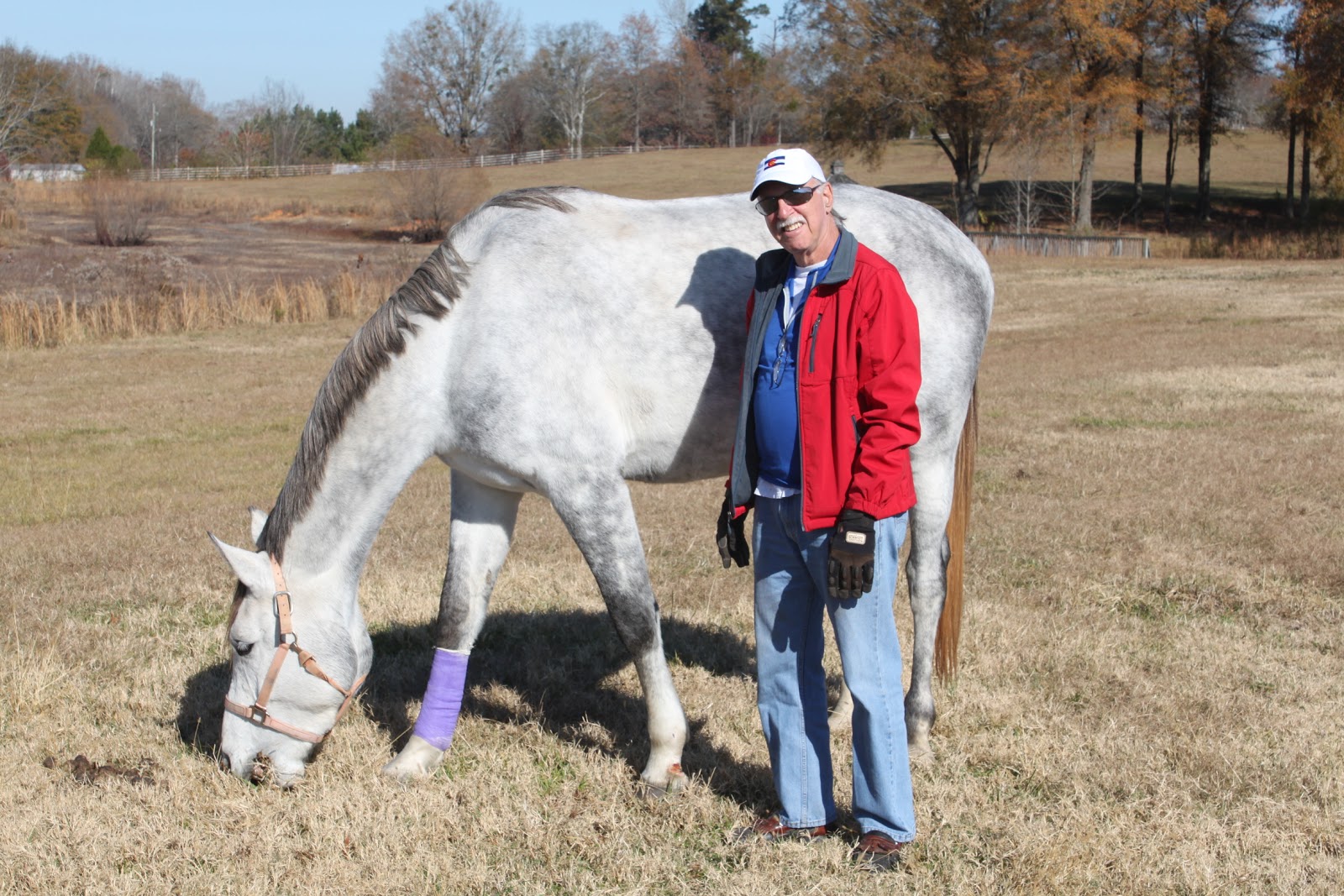
I always enjoy watching non-horsey people's reaction to horses up close and personal. Frank's first few comments were about J'Adore's size. Even horse folk like my mom noted her massive size at 3 years old- every bit of 16.3-17h, with big bones and a broad chest. The other trait that is blatantly obvious to the uneducated is what a curious, nosey mare she is. As soon as Frank walked to the fence, J'adore walked over to meet him and nosed every inch of his face and arms as if vetting him out to see if he was worthy of her. Frank handled her cautiously remarking on her sudden flinch at an accidental bump in the nose, "These creatures are so temperamental and big."

The horses took to Frank as he sat by the fence reading news items on his phone. I don't know if it was the peppermint gum he was chewing or they just liked his unassuming presence near the herd. I have always said that horses are the best judge of character. They immediately identify dominant personalities, call out over-bearing individuals, and are wary of people with unsettled personalities that are prone to drama. As Buck Brannaman says, "Your horse is a mirror to your soul, and sometimes you may not like what you see . Sometimes, you will." In my observation the horses including J'Adore liked what they saw in Frank's soul.


The Future 

I am very thankful for the involvement of Frank and Doris, and the many others that helped in 
setting up the partnership that will allow me to continue to train this wonderful mare. I have been researching the "horse syndicate" model for quite some time and believe it is probably the best and only way to go with horse partnerships. There are great resources for learning about the process of "syndicating" or forming a limited liability corporation to own a horse and I am including several links below for further reading. Competing horses at the top level of the sport can be very cost-prohibitive. I believe the "syndicate" model offers opportunities for expanding participation in the sport to people who don't necessarily want to ride or compete horses but enjoy their personalities and watching them perform. Ownership of a horse has the potential for financial rewards but first and foremost it should be fun and an adventure that everyone can share the process.


http://www.experienceeventing.com/syndication.aspx

http://www.westpointtb.com/about

http://www.dreamteamracingstable.com/

http://www.sporthorseenterprises.com/showjumpingsyndicates.php

http://www.demonedressage.com/Syndicate/index.html